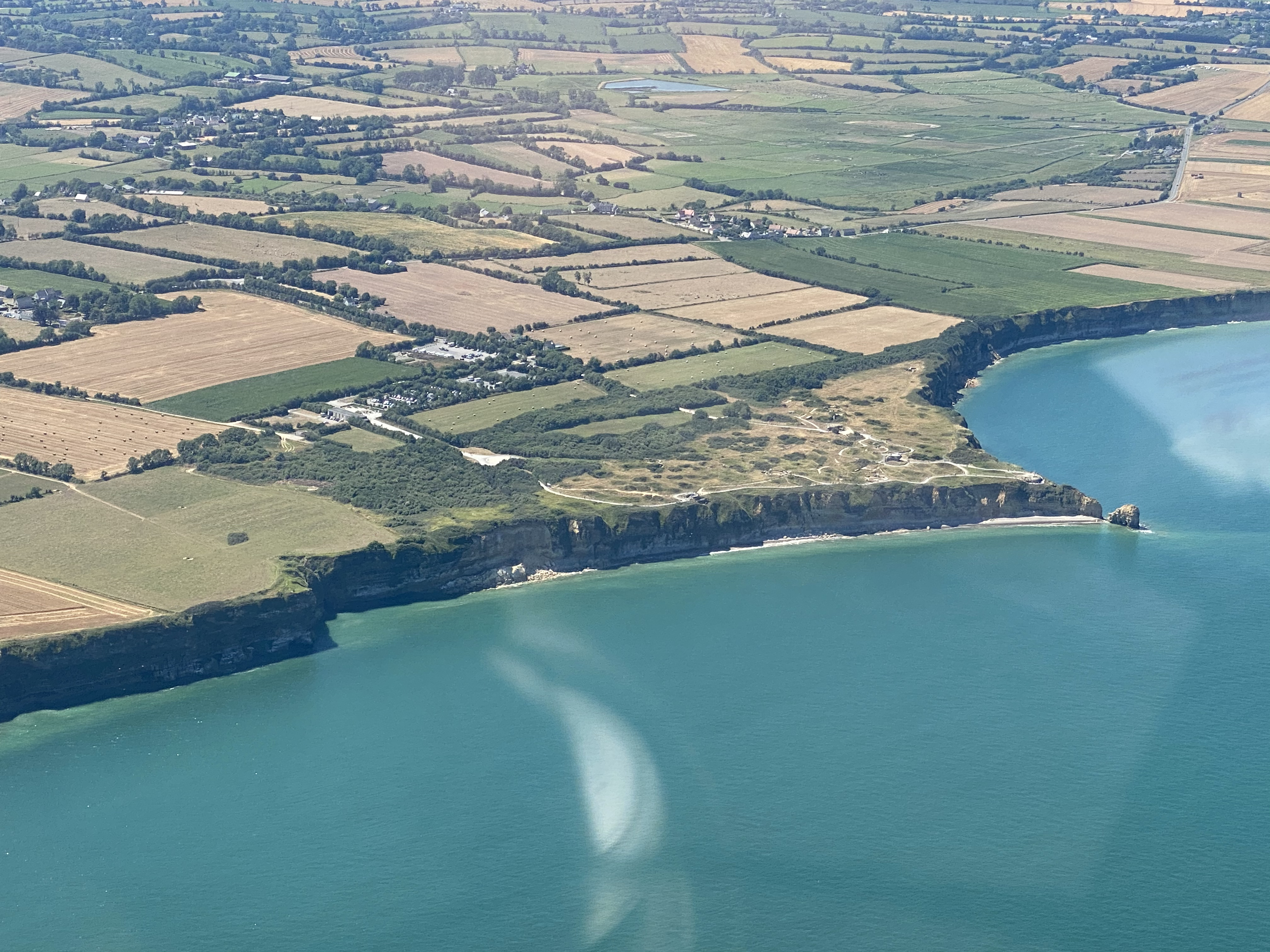
Pointe du Hoc, a majestic headland stretching into the waters of the English Channel, offers visitors today a panorama swept by the sea breeze and a lunar landscape filled with an incredible density of craters. However, on June 6, 1944, this thirty-meter high rocky prominence was the priority target of the American invasion forces. Squeezed in a vice between Omaha Beach to the east and Utah Beach to the west, it threatened to ruin the entire flank of the American operation because of the six heavy 155mm cannons that intelligence reported there.
A mission deemed "Suicidal"
The existence of this artillery battery directly threatened the armadas gathered offshore and the troops landing on the American beaches. The objective was clear: the battery had to be neutralized at all costs. It was the 2nd American Ranger Battalion, an elite troop commanded by Lieutenant Colonel James E. Rudder, that was designated for this reportedly suicidal task. The mission involved an unprecedented maneuver: approaching the steep rock face from the sea using landing crafts, scaling the cliff using ropes, grappling hooks fired by rockets, and firefighter ladders borrowed from the city of London, and then conquering the position in record time.
The execution of the attack: Delays and Unexpected Events
From the very beginning, nothing went as planned. Early on June 6th, the strong sea current diverted the fragile LCA barges to the east, toward the Pointe de la Percée.
- The 40-minute delay: Realizing their navigational error, Colonel Rudder had to firmly correct the course to head upstream. This sudden turn cost the Rangers 40 precious minutes, meaning two serious consequences.
- The loss of the element of surprise: During this time, the German defenders posted at the top of the cliffs were waiting firmly, as Allied naval artillery had ceased its suppressive fire at the exact mandated hour.
- The abandonment of the support force: Thinking the assault had failed (the Rangers had to send a flare signal 30 minutes at the latest if they took the point), the second Battalion, meant to join them, continued its route to land sadly amid the carnage of Omaha Beach.
The heroic ascent under deadly fire
When the three modest companies of Rangers finally arrived at the foot of Pointe du Hoc at 7:10 AM, the Germans began dropping stick grenades and firing blindly downwards. Moreover, the narrow beach where they had docked was collapsing under the naval battleships' bomb craters, precluding the proper use of the double extending ladders and forcing the soldiers to launch themselves with sheer arm strength.
The spectacle of these water-soaked men climbing smooth ropes under a hail of lead was nothing short of the highest bravery. The grapnels propelled by small rockets struggled to catch on the crumbled edges of the cliff, but, in less than fifteen breathtaking minutes, the first elements managed to hoist themselves to the summit, forcing the German defenders to retreat inland.
"These are the boys of Pointe du Hoc. These are the men who took the cliffs."
The grim discovery and the bitter victory
Once at the top, the chaos of a battlefield riddled with gigantic craters awaited them. Through an unrecognizable landscape, the Rangers formed small groups tracing the bunker network. But the surprise was great: once the imposing concrete pillboxes were seized, the Americans found wooden logs crudely disguised as artillery barrels inside! German General Rommel had recently moved the true battery over a mile backward to the inland region to shelter it from bombing whilst simulating its presence.
With legendary tenacity, a small patrol of riflemen ventured into the surrounding hedgerows and managed brilliantly to locate the precious cannons, abandoned and ready to fire, destroying them with thermite with impeccable tactical sense before the German counterattack organized the point.
Visit the extraordinary remains
The harshness of the subsequent combat turned the rest of the operation into an agonizing survival: attacked from all sides and without reinforcements from Omaha Beach, the 225 assault men had to hold the Point for two consecutive days. Only 90 of them were combat-fit when finally relieved.
The site, ceded by France to the United States, is a physical testimony of unique intensity. The Memorial, designed in the shape of a granite Ranger dagger, gives you today the full scale of that heroic day. With Normandy History Tours, we guide you through the disemboweled machine-gun nests and authentic concrete galleries, to comprehend the excess of the old Special Forces’ effort.